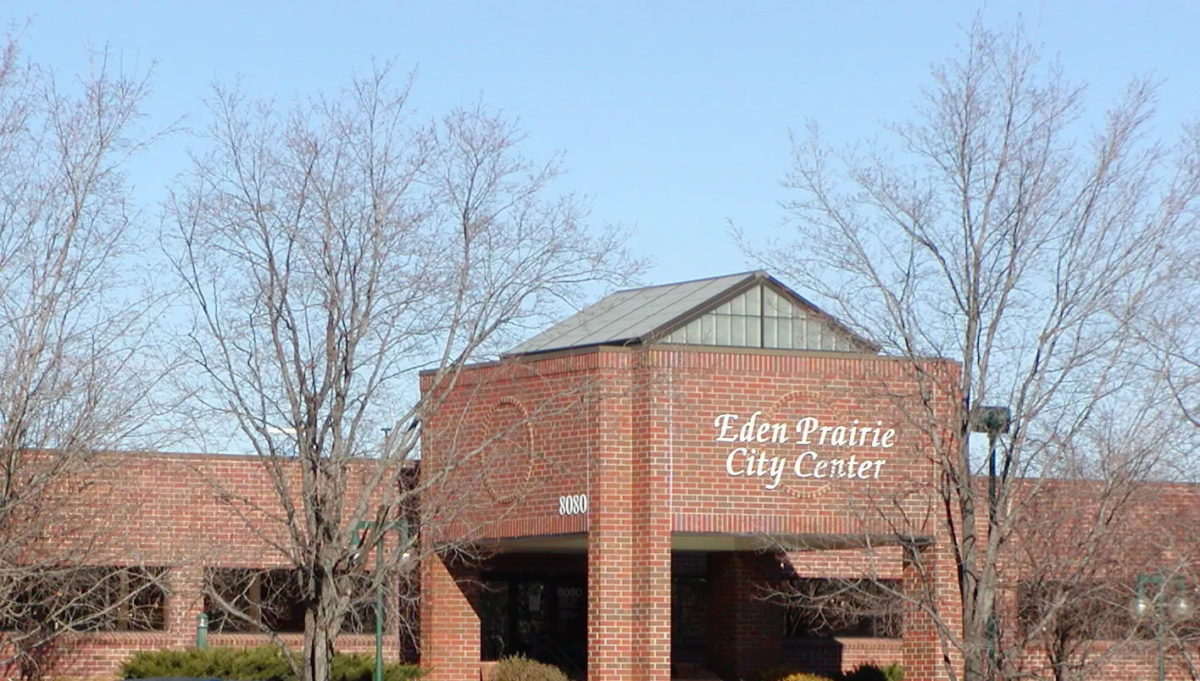


A federal tax credit is finally launching a two-decade-old green-energy dream in Eden Prairie.
The city is preparing to begin work in early 2026 on a geothermal energy project to heat and cool its Water Treatment Plant at Highway 5 and Mitchell Road. The $4.2 to $4.4 million project will be substantially offset by a $1.4 to $1.6 million Inflation Reduction Act (IRA) tax credit, cutting the city’s final cost to as low as $2.8 million.
This geothermal transition, which costs about $350,000 more upfront than a standard upgrade, is expected to yield long-term savings and a reduction in greenhouse gas emissions by lessening reliance on natural gas. City officials see this as the perfect opportunity to replace the plant’s aging HVAC system, some of which dates back to 1977.
It’s another sign of the city’s commitment to sustainability and to reducing carbon emissions. Earlier this year, Eden Prairie received a state award for demonstrating leadership in making its facilities more energy efficient, including its city hall and the Community Center.
While national commitments to fighting climate change swing like a pendulum, Mayor Ron Case said the City Council is staying true to the Climate Action Plan it adopted in March 2020, which aims to achieve net-zero carbon emissions in Eden Prairie by 2050.
Case said cities across the U.S. typically “don’t pivot in the moment like the national level.
“At the local level, because of funding, commitments, and the vision that each council has, I would say we’re much more consistent, on a track that doesn’t look like the ups and downs at the national level,” he added.
“We’re excited about these other energy alternative possibilities.”
Tapping water’s energy
This may be the first municipal water plant in Minnesota to use this particular type of geothermal energy, said Rick Wahlen, the city’s manager of utility operations.
Geothermal energy is a constant, reliable and clean power source that typically harnesses the relatively constant temperature of the earth or a nearby water body, both of which are warmer than the air in winter and cooler in summer. In other words, it’s like a natural furnace and air conditioner in one system.
Most geothermal systems use a network of pipes embedded in the ground and circulating water as an energy source. Eden Prairie’s project is instead utilizing the groundwater already being pumped into the treatment plant, so it requires some additional engineering and specialized design.
Eden Prairie has a “secret sauce,” so to speak, and it’s “the wonderful availability we have in this facility of a heating source that almost nobody else out here has,” Wahlen said.
“At any given moment we have roughly 400,000 cubic feet of water at 55 degrees temperature in this facility — that’s in the tanks, in the pipes,” he said. “That’s treated water making its way to our community.”
It’s a huge amount of water that naturally wants to release its temperature into the environment around it, according to Wahlen.
“So, it’s very easy to heat this place in the wintertime,” he said about the plant. “That naturally tempered water coming from the ground just generates heat into the facility, and it takes far fewer BTUs of heat in order to bring the place up to a comfort level that’s appropriate for business.
“In summer, you have the same thing going on. All of that water draws the heat down, it’s sort of like when you walk by a cornfield, it just naturally feels cool from all that evapotranspiration going on, or if you sit on the shore next to the ocean or beach, if the breeze is off the water, it cools you substantially. We just have this natural, temperature-moderating capacity in the facility that allows us to be very efficient.”
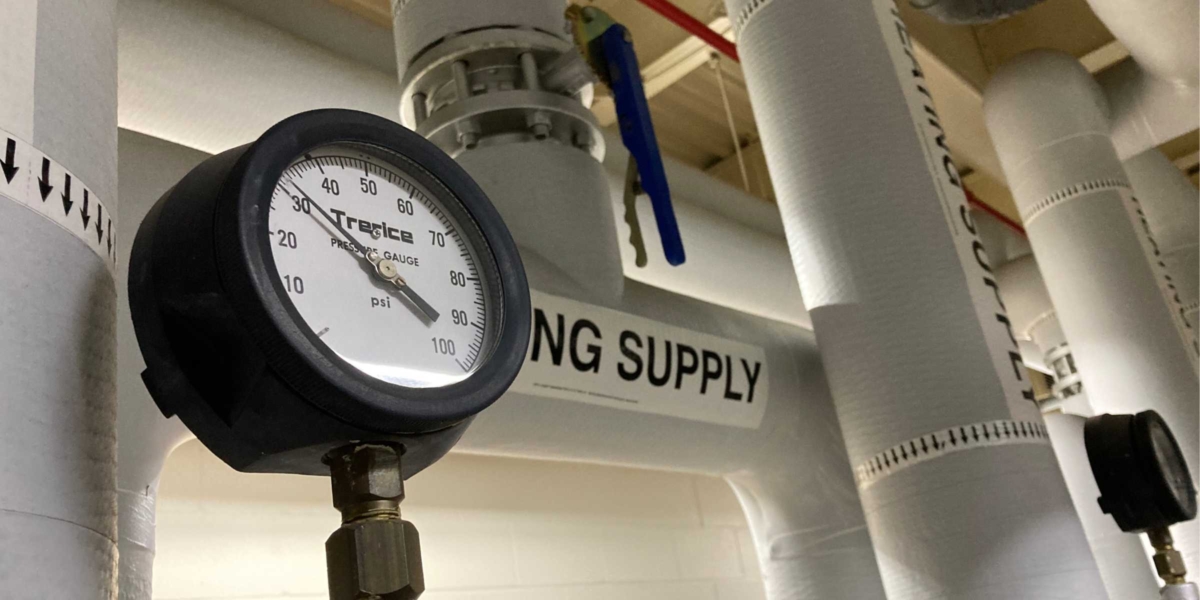
In a nutshell, new equipment will capture the heat of water already running through the plant and turn it into energy to drive a more efficient HVAC system. The water being tapped for energy will then be run through the plant a second time for treatment to ensure its safety as drinking water — a project condition put forth by the Minnesota Department of Health.
The new geothermal heating system is set to eliminate the facility’s reliance on natural gas for heating, achieving a 100% reduction in its natural gas carbon footprint.
While the geothermal heat pumps use electricity instead of natural gas, increasing the plant’s net electrical usage, Wahlen notes that this shift is still a major win for the environment. That’s because Minnesota’s energy grid is continuously becoming cleaner as utilities replace coal-generated power with renewable energy from wind and solar.
Ultimately, by switching to geothermal, the Water Treatment Plant — with its 222,000 square feet of space — becomes another key city facility helping Eden Prairie meet its overall green-energy goals.

Help hired to gain tax credit
While the Trump administration has taken steps to cut or eliminate wind and solar funding, it has expressed support for — and largely maintained funding for — geothermal energy projects, according to Global Energy Monitor, a nonprofit organization that catalogs worldwide energy news and data.
It may seem unusual for the City of Eden Prairie to pursue a federal tax credit for its project, since cities are already largely tax-exempt. However, in Minnesota, capital projects of this type are not technically exempt from taxes because typically the construction materials are purchased by the contractor instead of the city, with the contractor’s tax costs passed along to the city. Minnesota allows cities to apply for a tax exemption, but the process has been described as cumbersome, expensive, and an added liability risk for local governments.
Applying for the federal tax exemption is also complicated, which is why the city has hired Deloitte Tax LLP at a cost not to exceed $140,000 to accurately document expenses and file tax returns for the project.
Any costs not eligible for the federal tax credit are expected to be covered by the city’s utility enterprise fund, which is supported by water charges to business and residential customers.
“I think our residents would appreciate to know that, ever since 2009, we’ve looked at the long-range, long-term maintenance, replacement, and growth of the utility and we approached the city council about a plan to have incremental annual rate increases to keep up with not only inflation but also with aging, deteriorating infrastructure that always gets more and more expensive to repair over time,” Wahlen said. “With that planned rate increase that’s already there, we set aside money and built a reserve to take care of projects like this.”
For Wahlen, swapping an outdated, emissions-heavy HVAC system for one that reduces greenhouse gases and adds resilience long into the future just makes sense. It’s an idea they’ve been looking at for 20 years.
“Why wouldn’t we,” he asks rhetorically, “think outside the box and use the water in our own facility to help with the heating more than it does already?”
The city expects to have the project built, tested and operational by October 2026.

Editor’s note: This story is the latest in an ongoing series called “Sustainability in Action.” The series spotlights sustainability efforts in Eden Prairie at various levels, from local government and businesses to community groups and residents. It includes a page dedicated to local, state, and national sustainability resources. This series has received support from a grant from the Eden Prairie Community Foundation.
If you have an idea for this series, contact the editors.