

One week into light-rail testing on the METRO Green Line Extension — a 14.5-mile, 16-station route — Metro Transit officials held a press conference Thursday morning to mark the project’s progress and discuss its impact on the southwest metro.
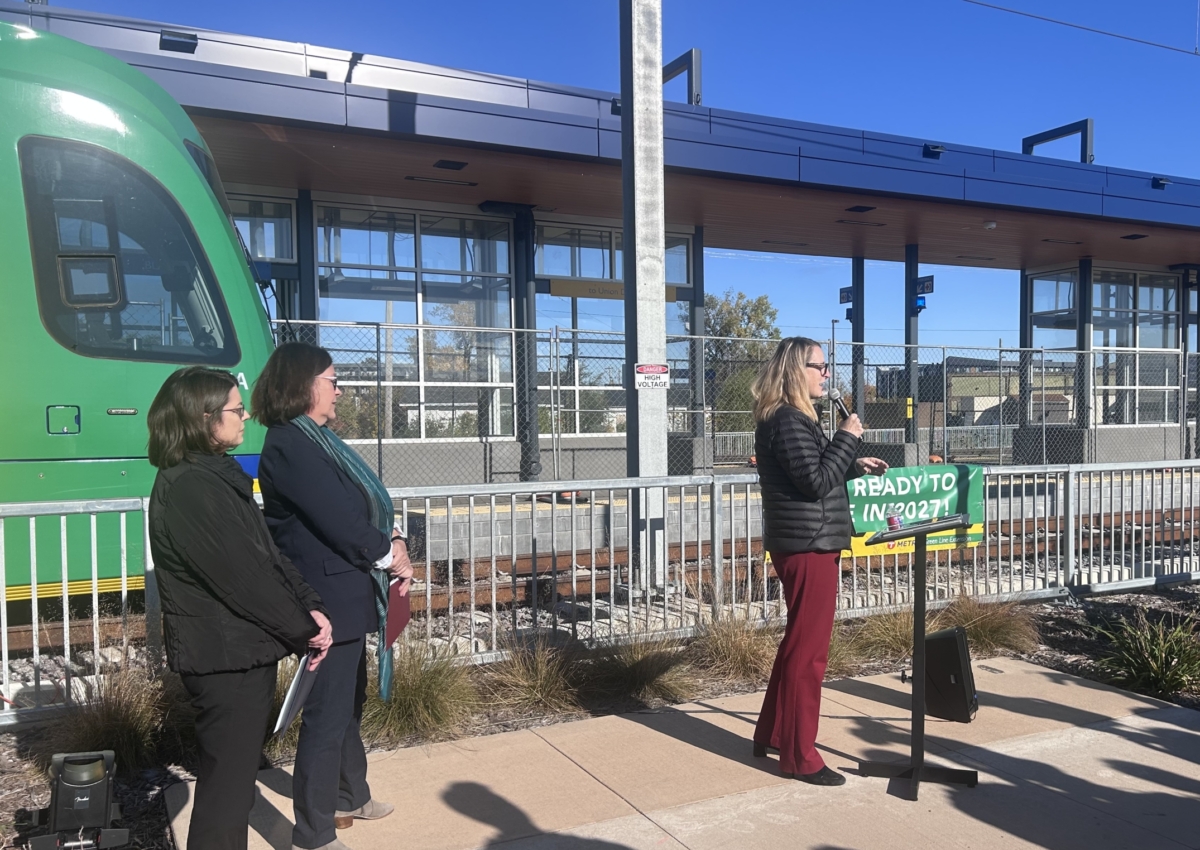
Representatives from Metro Transit, Hennepin County, the Metropolitan Council — the regional planning agency for the seven-county Twin Cities area — and the City of Hopkins gathered at the Blake Road light-rail stop to celebrate the long-awaited next step and highlight how the system will benefit surrounding communities.
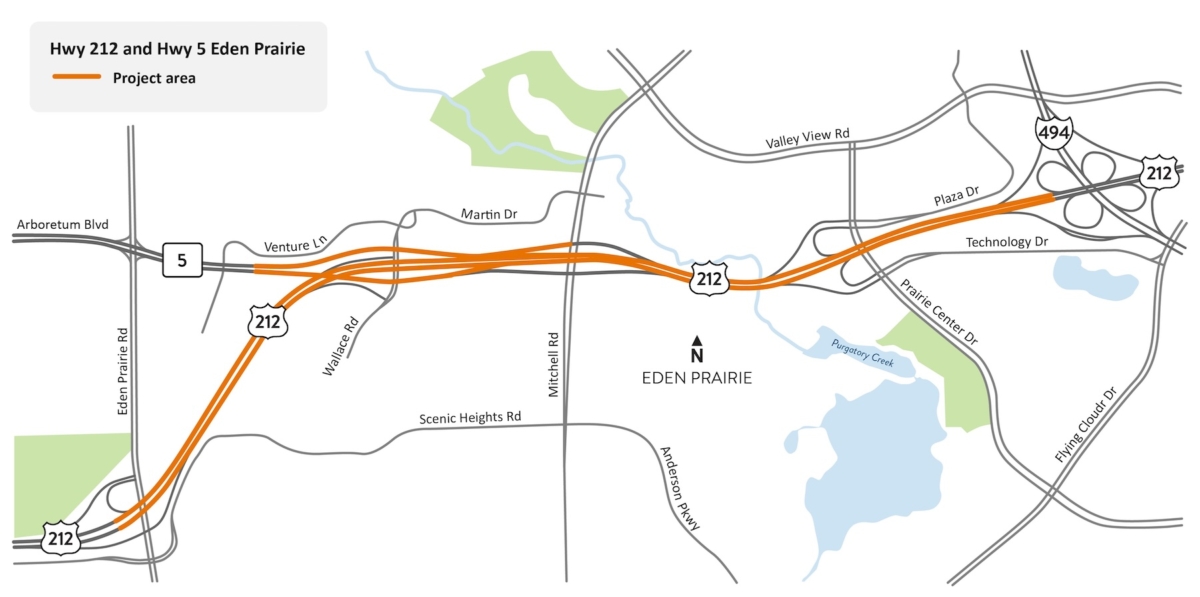
The line runs from Target Field in Minneapolis through St. Louis Park, Hopkins and Minnetonka, ending at SouthWest Station in Eden Prairie, its western terminus. Officials said the line is about 95% complete, with remaining work in Minneapolis. Passenger service is expected to begin in 2027.
When service begins, trains will connect Eden Prairie to downtown Minneapolis in about 35 minutes, with transfer options to the existing Green and Blue lines.
Hennepin County Commissioner Marion Greene, who represents District 3, which includes parts of Minneapolis and St. Louis Park, said investing in public transit is among the most important investments a community can make for its residents.
“The network of a community and a region is defined by the network of transit,” Greene said. “New development that follows light rail is undeniable.”
Cities along the Green Line Extension have invested nearly $4 billion in infrastructure near the track, Greene said. There are more than 8,500 housing units along the extension, many of which are affordable housing options.
In Eden Prairie alone, there has been more than $560 million in development, according to a Met Council press release. There are 1,000 new housing units with 140 affordable units, $316 million in commercial development, and $36 million in industrial projects.
In addition to stimulating economic growth, the Green Line Extension also connects 100,000 people between Minneapolis and Eden Prairie to 165,000 jobs, Greene said. Riders can use the light rail to access health care and other amenities around the metro.
Greene said public transit helps to mitigate the cost of travel for families. Families who do not rely on cars save money on insurance, gas and car maintenance.
The project carries a total cost of $2.86 billion — up from $1.25 billion and delayed by construction challenges and difficult soil conditions since its 2018 service target, according to the Minnesota State Auditor.
Despite the higher price tag, Met Council Interim Chair Deb Barber said the line’s regional impact will justify the investment.
“The investment in the network and the investment along the line is really showing that these projects can be transformational,” Barber said. “And it’s important to have a fully connected transportation system with multiple different types of modes, and this is one of those key modes.”
Greene said every dollar spent on the project was intentional and deliberated over.
“Every dollar that has been spent has been well scrutinized, and so I feel confident in how this project has been executed,” Greene said.
As the Met Council continues work on the Blue Line Extension from Target Field to Brooklyn Park, Greene said officials are applying lessons learned from the Green Line project.
Testing and safety preparations
The year of testing left to do feels like a long time, and a 2027 opening day feels far off, but Barber said the testing process follows federal standards to ensure the trains and tracks are fully operational before opening. More than 4,000 tests must be completed to ensure the line’s safety.
Ridership on Metro Transit is increasing, with about 34,000 riders using the service daily across all modes of transportation, Barber said.
“We still know that there are lingering impacts from COVID and impacts on ridership, but we are seeing increased ridership across all modes, and we expect that to be reflected in this one as well,” Barber said.
To prepare for the extension’s launch, Barber said the Met Council is already hiring more law enforcement — including police, transit agents, and community service officers — to ensure trains are fully staffed and ready when service begins in 2027.
She said the increased presence is already making a difference across the system.
“The mode I ride the most is the light rail, and I’ve noticed a very profound difference,” Barber said. “I got my fare check twice last week, which I think is fantastic, and just shows that having that multi-layered security out in the system really is making a big difference.”
Metro Transit General Manager Lesley Kandaras said the agency is stepping up safety education as testing begins. Trains are wrapped with messages reminding people to stop when lights are flashing, never try to beat a train, and stay alert near tracks.
Although the project took longer than originally planned, Greene said reaching the testing phase is a milestone worth celebrating.
“We have to recognize how important today is that we did make it to this point,” Greene said. “We did have to reevaluate and replan as we went through this process, but we feel like we have now a very successful project, and we’re very confident in the outcomes.”