


Minnesota school districts received nearly $1.3 billion in federal funding to support students in public K-12 schools during the 2023-2024 school year, according to a new online tracker of federal funding from the Minnesota Department of Education.
This is a relatively small amount compared to the total spent by state government and local school districts: Around 8% of Minnesota’s education funding comes from federal investments, according to an analysis of National Center for Education Statistics data by education organization Education Resource Strategies. But given rising costs and ballooning property taxes, every dollar counts.
The federal spending tracker comes amid uncertainty around federal funding from the government shutdown, fluctuating negotiations over next year’s education budget and the gutting of the U.S. Department of Education. The Trump administration has, in recent months, shrunk the federal agency responsible for sending money to school districts through mass layoffs, including almost the entire office overseeing special education. The latest layoffs will make it hard for the Department of Education to fulfill its role in funding and oversight, former employees have told national news outlets.
“Minnesotans deserve clear information about how federal investments support the students and schools in their neighborhoods,” said Commissioner Willie Jett in a release. “This tool helps families, educators, and community members see where their tax dollars go.”
Federal spending supports the state’s free meal program, special education programs, teacher professional development and services for students experiencing poverty.
The total federal funding for Minnesota is equivalent to the salaries of nearly 14,000 teachers out of the state’s 73,000 teachers.
Federal funding covered $266 million of free breakfast and lunches for students who qualify under federal guidelines, which translates to 133 million meals. The state spent an additional $267 million in the 2023-2024 school year to cover the cost of universal free meals passed in 2023.
Federal money comprises a smaller share of total education spending compared to other states and less than surrounding states — for instance, federal money makes up nearly 19% of North Dakota’s education funding — but still a significant portion of state education revenue.
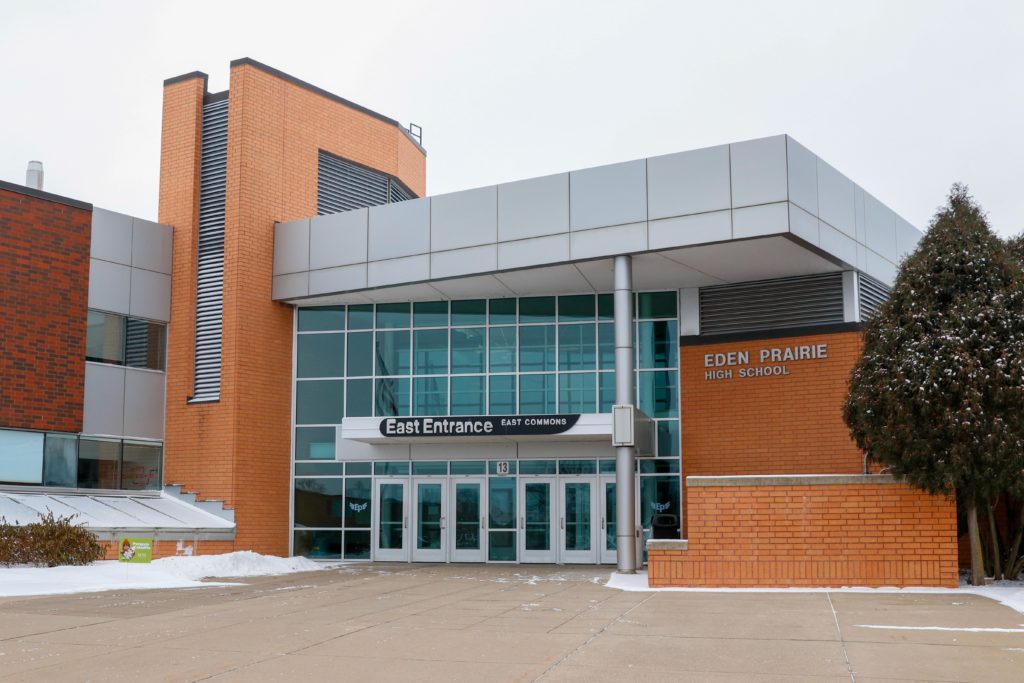
Federal funding by district varies and accounts for more than 20% of districts’ total budget in 13 school districts. Those districts include small districts serving primarily Native American students, like Red Lake and Pine Point, and the state’s two large urban districts, Minneapolis and St. Paul. Federal funding accounts for less than 3% of district budgets in nine school districts, including affluent suburban districts such as Minnetonka, Edina and Orono. It accounts for about 6% of Eden Prairie Schools’ budget.
MDE is asking people to share their stories about how public education funds impact them or their community, and how the ongoing federal shutdown plus threats to federal education funding are impacting them. Minnesotans can share their story and find district-level one-page summaries here.
This story originally appeared Oct. 22 in the Minnesota Reformer. It was written by education reporter Melissa Whitler, who has a background in economic analysis, and data reporter Alyssa Chen, who focuses on health care policy.
The Minnesota Reformer is part of States Newsroom, a nonprofit news network supported by grants and a coalition of donors as a 501(c)(3) public charity. Contact Editor J. Patrick Coolican for questions: info@minnesotareformer.com.