


Washington state’s paid leave program is facing a shortfall of $350 million after years of error-prone forecasting.
Among the program’s flaws in Washington: they plan for the future by looking backward, using the past as a baseline for calculating future needs, thereby ignoring potential demographic shifts and economic forecasts.
And, yet, Washington state lawmakers are once again determined to fill the account.
Why? Because it’s a wildly popular benefit.
Minnesota state officials and the 350 workers who will be rolling out the state’s new paid leave benefit are trying to learn from mistakes in Washington and the nearly dozen other states with paid leave — all while under the microscope of election year politics.
Minnesota’s paid leave program will launch on Jan. 1, ushering in a new system for Minnesota workers that grants up to 12 weeks of family leave and 12 weeks of medical leave per year, capped at 20 weeks in a single year. Employers and workers will pay into a fund, with the payout determined by a wage-based formula, capped at $1,423 per week. The program also includes job protections.
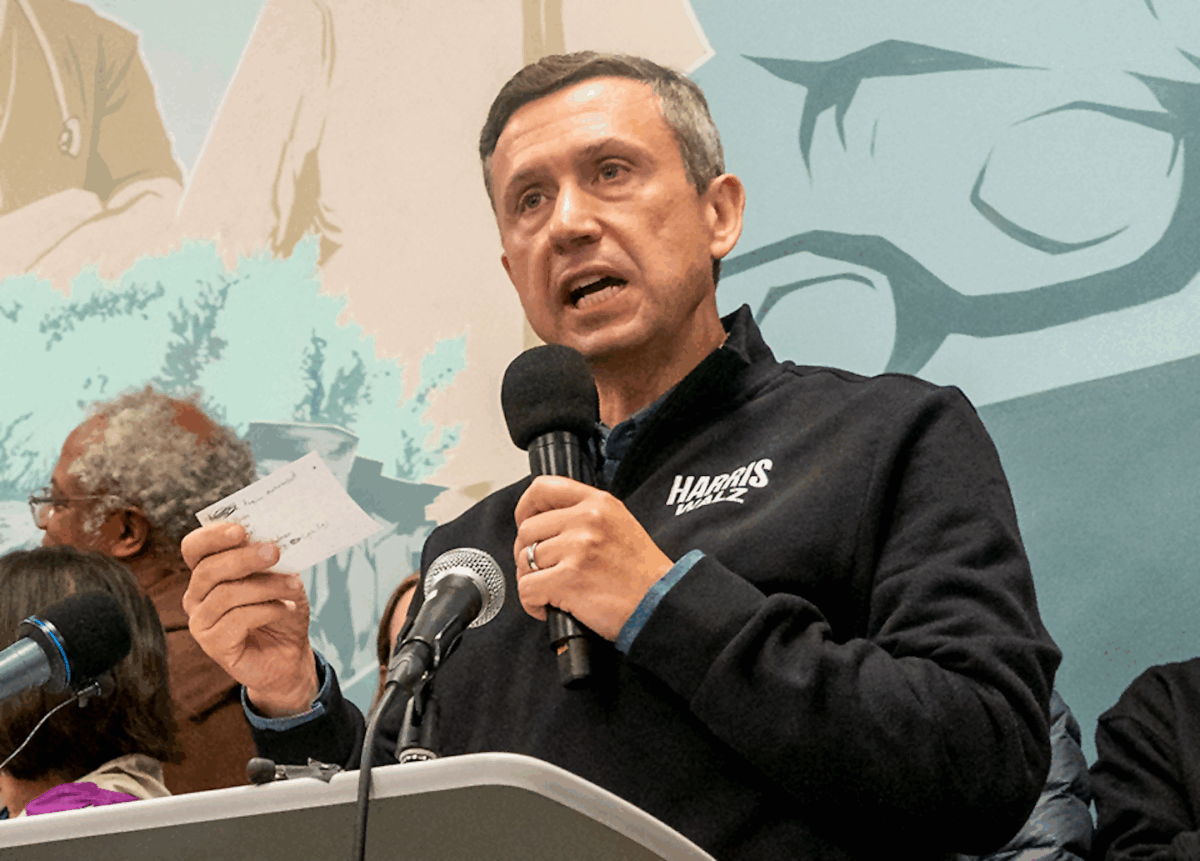
The stakes couldn’t be higher, for the businesses and workers affected, but also for Gov. Tim Walz and Democratic-Farmer-Labor lawmakers. Paid leave was a signature accomplishment during the 2023 DFL trifecta. Walz often cites paid leave when he argues that Minnesota is among the best states to raise a family.
But now they’ve got to make it work, and if they don’t they can expect to pay the consequences. Walz is seeking an unprecedented third, four-year term in 2026; voters will also determine control of the narrowly divided Legislature.
Risks for the Walz administration include the potential for fraud that has beset other Minnesota public programs. Then there’s foreboding technology glitches, like the 2017 revamp of the Minnesota Licensing and Registration System that caused massive headaches for thousands of drivers trying to get their licenses and registration tabs renewed.
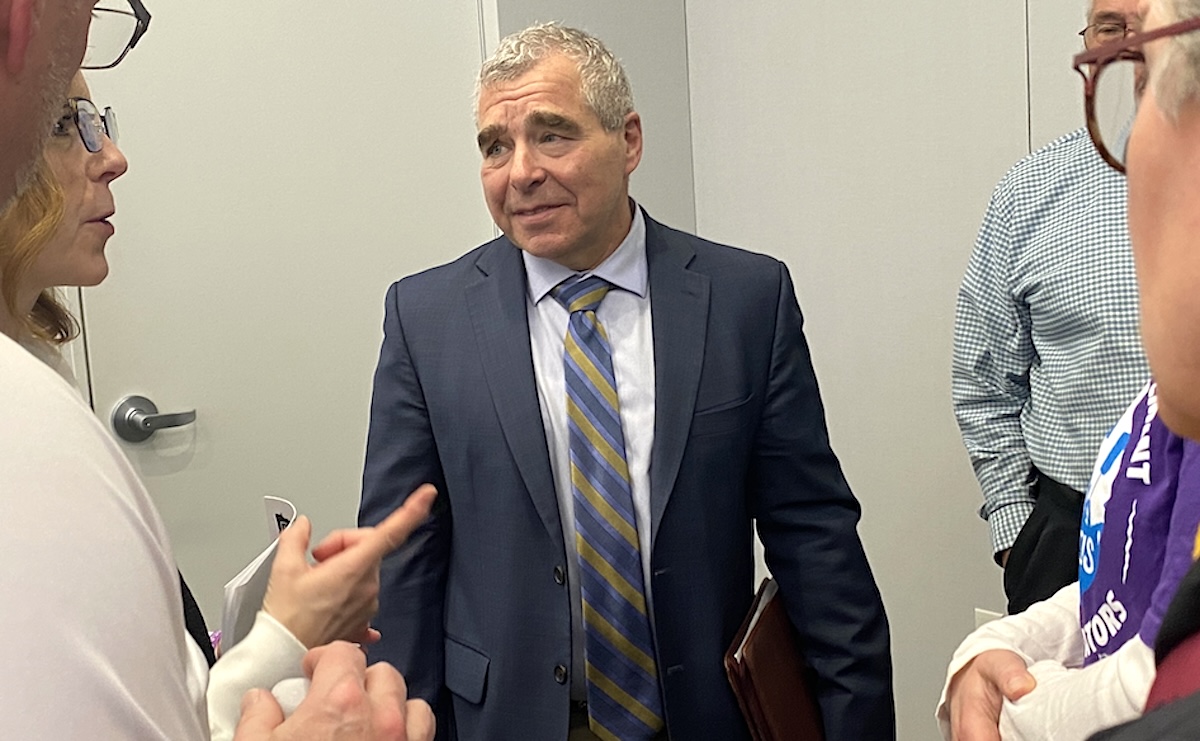
To ensure a smooth rollout, Walz recruited an out-of-state paid leave director who helped launch Massachusetts’ paid leave program.
Massachusetts was the eighth state with paid leave; Greg Norfleet helped raise the curtain in 2021 despite interruptions caused by the COVID-19 pandemic.
Norfleet said his team is learning from others. For example, Minnesota employers will be more engaged in the application process — the state will notify bosses if one of their workers applies for leave. In other states, employers have been blindsided by their workers, who would only notify their bosses after the state signed off on their leave, Norfleet said in a Reformer interview.
When he was asked if there’s anything that’s keeping him up at night about Minnesota’s rollout, Norfleet said no.
“I’m sleeping pretty well,” Norfleet said.

The Minnesota Chamber of Commerce, however, thinks he should be tossing and turning a bit more.
The Chamber — which opposed the paid leave bill at the Legislature, citing the burdens of higher taxes and finding replacement workers — said in a statement to the Reformer that they’ve been conducting outreach efforts to help members comply with the new law, but they remain concerned: “It’s clear there are still significant awareness gaps and plenty of implementation questions, particularly for small businesses, many of whom thought they were exempt from the law.”
“As employers of all sizes are trying to figure out how to coordinate with this new mandate, we are increasingly concerned about readiness,” the Chamber statement reads.
Norfleet says the agency is well-staffed and has hosted many engagement sessions with businesses and Minnesotans to answer questions.
“That foundation that we’ve built gives me a lot of confidence of where we are and how we’re going to be able to meet the moment for Minnesotans,” Norfleet said.
How it works
Minnesota’s paid leave program is partnered with the state’s unemployment insurance system, from which the Department of Employment and Economic Development has gathered data to avoid redundant reporting requirements from businesses.
The state is also ahead of the game in another respect: In most states with paid leave, a payroll tax goes into effect about a year before the program rolls out to build up enough funds for the benefits. This means employees pay a tax without reaping any rewards.
Minnesota lawmakers in 2023 allocated $668 million in initial funding for the paid leave account and $122 million for administrative costs, paid for with an $18 billion budget surplus.
In Minnesota, a 0.88% payroll tax will go into effect in January, split between employers and their employees. Most employees will pay half, or 44 cents for every $100 in taxable wages. (Small businesses — those that employ 30 or fewer people — pay a reduced rate of 0.66%.)
Paid leave may boost wages for women
California implemented paid family leave in 2004. In the decades since, numerous studies have shown that access to paid leave to care for newborns and children have positive health impacts on parents and children alike.
Surveys of people who’ve taken paid leave say they have boosted morale, better job security and economic stability. Paid leave, when offered with job protections, can also help states that have a dire need for elder care, as people can afford to take time off to be family caregivers after a fall or illness, for example.
According to the left-leaning Center for American Progress, workers lose $22.5 billion in wages each year because of a lack of paid leave.
Women who take paid leave are also more likely to return to work after their child’s birth compared to those who don’t take leave, and paid leave is associated with higher wages among mothers.
Research on paid leave’s effect on businesses is mixed. While it’s associated with less employee turnover and higher productivity, the cost of employees taking family leave can hurt small businesses that struggle to absorb short-term losses.
A Center for Economic and Policy Research study of the Connecticut paid leave program’s impact on businesses found that most employers reported a modest impact or no impact on their costs or business operations. About a year-and-a-half after the law’s implementation, about 75% of 251 Connecticut employers said they support the paid leave law.
Jessica Mason, a senior policy analyst with the National Partnership for Women & Families, said the program is a net win for families, especially during uncertain budget times.
“These days, folks are really watching our dollars, so it’s important to feel like everything we’re making investments in is really worth it — and the evidence is really clear that paid leave is one of those things,” Mason said.
Local government, school districts concerned about cost
Minnesota’s paid leave law applies to nearly every employer, not just businesses, and many are anxious about the new program.
Given already tight budgets, a new payroll tax may lead cities to raise property taxes to pay higher personnel costs, said Lisa Schaefer, the League of Minnesota Cities’ human resources director.
Schaefer said city governments confront many unknowns. Among the conundrums unique to government entities: If an elected official is unable to serve for 90 days, a vacancy can be declared under state law. It’s unclear how the paid leave law would apply in that situation, Schaefer said.
Many cities also have unionized employees who have paid leave negotiated in their contracts, so cities and unions will have to renegotiate new terms, she said.
Minnesota school districts’ main concern about paid leave is the prospect of losing important educators. Schools are already facing substitute teacher shortages, and weeks-long absences for paid leave will exacerbate the issue, said Tiffany Gustin, director of management and insurance trust services with the Minnesota School Boards Association.
Gustin said the issue with paid leave boils down to “the responsibility that school districts have to still provide an education to its students.” Many districts will also have to renegotiate their union contracts if they include paid leave, Gustin said.
The ‘baby bump’
Almost every state with paid leave has encountered what Norfleet said in the paid leave world is known as the “baby bump,” meaning an influx of applications from parents who welcomed a child into their home a year prior to paid leave rolling out.
Minnesota parents who welcomed a child into their home this year can claim the state’s paid leave benefit in 2026, even if they’ve already taken leave through their employer.
Norfleet said paid leave for parents who had a kid in 2025 is the most-called-about question, and Minnesota is ready to meet the moment.
Mason, the policy analyst, said that states have struggled to predict the number of applications that will come in on day one and don’t hire enough people to handle the abundance of claims.
Norfleet said DEED is hiring temporary workers to help with an anticipated 17,000 to 20,000 applications for leave in the first month — including between 5,000 to 7,000 “baby bump” applications.
Walz and the DFL architects of the program hope that by allowing parents to spend time nurturing the youngest Minnesotans, they’ll feel more secure having more babies. The children, meanwhile, will enjoy lifelong benefits of stable and attentive parenting, at least for 12 weeks, or perhaps 24 if parents decide to take the leave back-to-back instead of together.
Norfleet explained his mission with a line that could fit on a Hallmark card: “Paid leave is really about making time for moments that matter.”
This story originally appeared in the Minnesota Reformer. It was written by Michelle Griffith, who covers Minnesota politics and policy for the Reformer, with a focus on marginalized communities.
The Minnesota Reformer is part of States Newsroom, a nonprofit news network supported by grants and a coalition of donors as a 501(c)(3) public charity. Contact Editor J. Patrick Coolican for questions: info@minnesotareformer.com.