

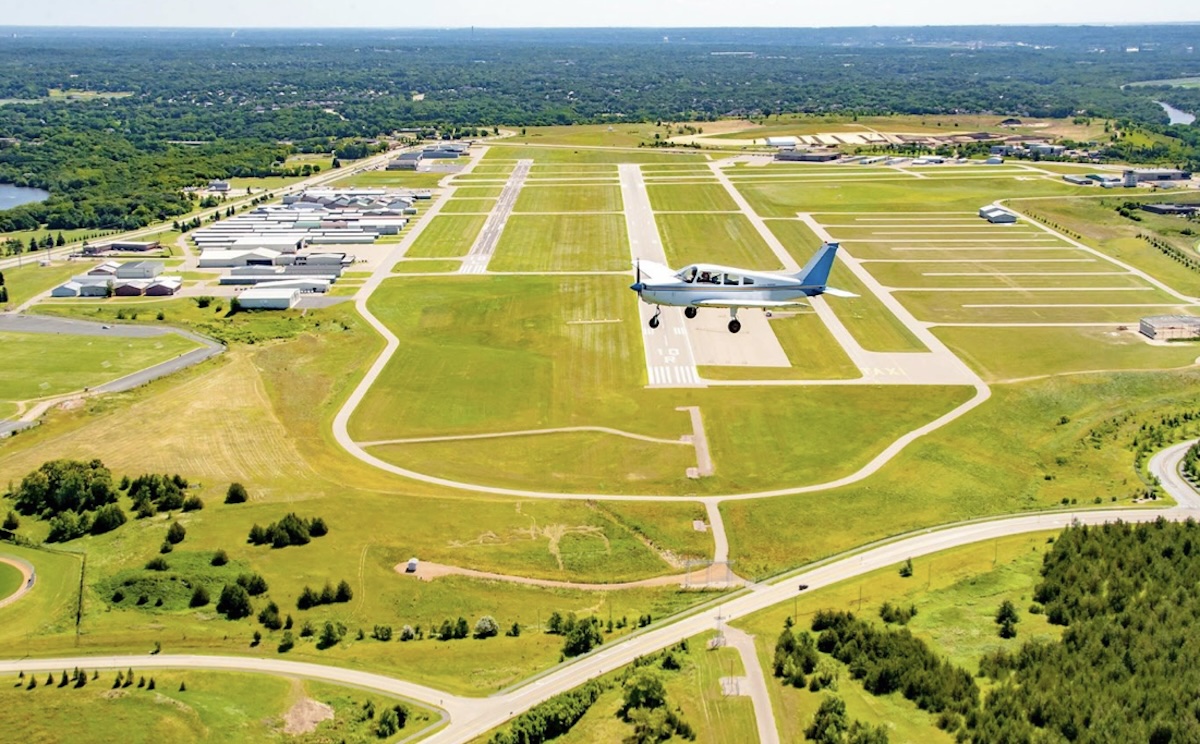
The Metropolitan Airports Commission (MAC) announced the approval of its Flying Cloud Airport 2040 Long-Term Plan on Sept. 16.
The plan outlines short-, mid- and long-term projects for the Eden Prairie airport based on aircraft activity, said Eric Gilles, MAC’s director of airport planning. It also ensures that MAC’s airports comply with Federal Aviation Administration (FAA) standards.
Gilles said the FAA requires airports to update their long-term plans every seven to 10 years to ensure they are adhering to the agency’s guidelines, regardless of whether there are proposed changes an airport might want to make.
The Flying Cloud plan includes proposed sites for additional hangars, new taxiways to improve connectivity, and an Engineered Materials Arresting System (EMAS) at both ends of the main runway, Gilles said.

The Metropolitan Airports Commission (MAC) divided the Flying Cloud Airport 2040 Plan into near-, mid- and long-term goals. Source: MAC
Updates are proposed based on forecasts for airport activity, growth, and demand over the next 20 years, he said. Adjustments are later made to reflect actual conditions and demand.
MAC oversees seven airports, including Minneapolis-St. Paul International and six reliever airports in the Twin Cities area, among them Flying Cloud, Gilles said. Because MAC manages multiple facilities, funding priorities sometimes shift depending on which airports have the most urgent needs.
Environmental review processes can also slow or prevent projects from getting started at the anticipated time, Gilles said.
“We often find in the long-term planning process that we put out a schedule when we anticipate some of these projects to occur over the next 20 years,” Gilles said. “Oftentimes, that’s not the case.”
Flying Cloud is the busiest general aviation airport in the Twin Cities, recording 132,744 takeoffs and landings in 2024 and serving as the home base for more than 420 aircraft, according to the MAC.
Use of Flying Cloud is expected to continue growing, especially among businesses and flight schools using the airport, according to the long-term plan. Airport operations have consistently increased at Flying Cloud since 2014, except during pandemic years.
The plan proposes hangar development throughout the airport, including the southern part, Gilles said. However, the air control tower located in that area creates sightline issues, raising safety concerns.
Previous long-term plans also proposed hangar development in the southern section, but construction could not move forward because of the tower’s location, Gilles said.
MAC is considering moving the control tower in a project outside of the long-term plan, which would allow the airport to safely add hangars in that area, Gilles said.
The youth soccer and baseball fields on the western side of the airport are on land owned by MAC and leased to the city. Part of the plan indicates hangar developments could be built on some of those fields.
Gilles said there may be hangar growth in that area over the next 30 years, but it likely would not be for 15 to 20 years and would depend on a demonstrated need for more hangars.
“Some of that is to satisfy FAA requirements, to show that we have a plan, not necessarily a guarantee, but a plan to allow us to accommodate growth if that forecast were to be true,” Gilles said. “So some of that is kind of a placeholder to explain to the FAA that we have the space made available to us.”
MAC’s proposed taxiway relocation is considered a mid-term goal at about the 10-year mark, Gilles said. The relocation would allow for improved efficiency to get airplanes off the runway, enhancing safety.
Additional taxiways in the western part of the airport could also help improve safety by reducing crossings with a parallel runway in the northern part of the airport for aircraft using runways to the south, Gilles said.
“It’s a mix between improving airfield efficiencies and operational capability, but also enhancing the safety of aircraft that are maneuvering on the ground,” Gilles said.
MAC also proposed adding EMAS beds to the end of Flying Cloud’s runways to improve safety for landing aircraft, Gilles said. The addition would help the airport continue to meet FAA standards.
EMAS beds are safety features installed at the end of many airport runways to safely stop planes that overrun the pavement.
Gilles said the overall goals of the long-term plan are to maintain the airport’s operational capabilities, enhance safety, and promote financial sustainability.
The long-term plan went through several review processes, Gilles said, including stakeholder engagement, a public comment period, and a consistency review through the Metropolitan Council.
Projects typically must go through an environmental review before construction, opening another opportunity for public engagement and comment, Gilles said.
The plan also still requires FAA approval and is subject to change, he said.
“These plans are still subject to change, and could change during that environmental review process to make sure that they conform to any environmental impacts that may come up,” Gilles said.