

Editor’s Note: Alex Karwowski, the writer of this story, is a third-year journalism student at the University of Minnesota.
The National Collegiate Athletic Association (NCAA) is making a push to have mental health looked at “as just another injury,” according to Missy Strauch, director of sports medicine at Augsburg University.
Coaches are attending 3- to 6-hour seminars where they are educated on how to identify mental health issues. Strauch said the trainings are called “Mental Health First Aid” and are conducted to help the NCAA destigmatize mental health concerns and address them like a physical injury.
“We never talked about (mental health), you know, 15, 20 years ago,” Strauch said. “Everybody just kind of had this ‘suck it up’ kind of attitude.”
According to Rachel Johnson, director of sports medicine at St. Cloud State University, since the end of the pandemic, athletes have been much better about being open to talking about their mental health, which allows sport psychologists to provide better access to care.
“A big football player or hockey player or baseball player would come to us, and they would have some kind of complaint that maybe wouldn’t be very specific mental health, and you would kind of (ascertain) that they needed some counseling,” Johnson said.
According to Phil Imolte, a sport psychologist at the University of Minnesota, when an athlete associates their identity with a sport and is unable to play, the feeling of not participating can impact the athlete’s mental health. The concept described by Imolte is defined in an article from the National Library of Medicine as “athletic identity.”
Holloway provides support to teammate with season-ending injury
Niamya Holloway, a 2022 Eden Prairie High School graduate and current forward on the Gophers women’s basketball team, sat out last season due to an injury to her left knee. She said she had to look at the bigger picture and know it was OK to not always go “into it” every day.
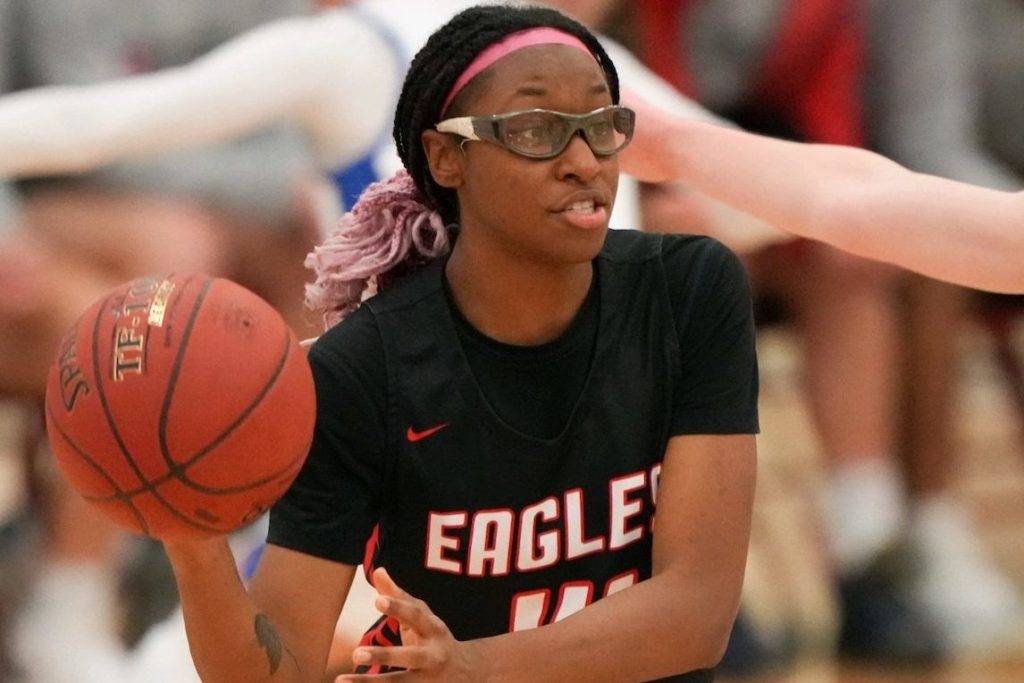
“I had to have, like, really small goals like ‘be a voice for your team on the bench,’” Holloway said. “I didn’t have to be so happy to be doing rehab again but I knew if I got through this day then I could get through it any day.”
Rachel Banham is a Minnesota Lynx guard and assistant coach for the Gophers women’s basketball team. She said one of her biggest values for the Gophers women’s basketball team, outside her official duties, includes acting as a mentor for the athletes.
Banham played basketball at various levels throughout her life, including on the Gophers women’s team from 2011 to 2016. She suffered a season-ending ACL tear her senior year as a Gopher. She said her injury was an “eye-opener” for her.
“It felt like the world was coming to an end, like super dramatic, but that’s kind of where your mind is at,” Banham said. “It made me really put into perspective that I need to be well-rounded.”
With Banham’s experience in life, injuries and dealing with adversity, she finds herself assisting the current Gophers women’s basketball team through their injuries and any mental health issues that come with them, acting as a young, familiar figure for the athletes. “I feel like I have a lot of perspective with that,” Banham said. “My biggest value is being able to be relatable and listen to them.”
Much like Banham, Holloway now serves as a mentor for teammate Kennedy Klick, who is out for the season with a knee injury. “If I (can) have a voice like that, like an older girl that’s been through the exact same thing that I’ve been through, it would be really helpful (for Kennedy),” Holloway said. “I just want to be there for her.”
Mental health resources available for student-athletes
Not every team has mentors in their program, so sport psychologists develop presentations for athletic teams toward the beginning of each sport’s season to introduce the sport psychology staff and resources available to student-athletes, according to Strauch. Strauch’s team also sends out optional wellness-check surveys to identify where athletes are both physically and mentally.
Based on the responses, Strauch, or a member of her team, will reach out to the respondent to get more information from the athlete and come up with a plan of action based on the conversation.

Strauch said their method of reaching out depends on the result of the survey. If the respondent indicates a high number, then there is a phone call; if it’s in the middle, then it is an email; and if it is low, then Strauch’s team will still check in and remind the respondent of the resources available.
Colleges are continuously updating their methods of care for student-athletes. Johnson said St. Cloud State is in its second year of offering on-site sport psychology services for student-athletes. “That has blown up to the point where we have probably a 15 to 20-person waitlist for that,” Johnson said.
The NCAA Student-Athlete Health and Wellness Study, published in December 2023 and using data collected during the 2022-2023 academic year, indicated that over half of the respondents know where to find support on their campus and about half feel comfortable seeking support on their respective campus.
Parker Fox’s story
Imolte said that when athletes struggle with not being able to participate in their sport, sport psychologists help them identify other areas of their lives they can “get in touch with.”
Gophers men’s basketball forward Parker Fox described himself as a guy who is always high-energy and happy. He never thought he needed to take care of his mental health.
“You know, ‘Parker Fox never has a problem with his mental health, he’s always excited, he’s always happy, he’s always energetic,’” Fox said.
When Fox tore his ACL for the first time, he still didn’t think he had to take care of his mental health, but when he did it a second time, he started to second-guess himself and doubted his well-being.
“It’s good to have a diverse portfolio in terms of who you are as a person, especially when you’re doing something as specific as athletes,” Imolte said. According to NCAA data, student-athletes reported planning for the future as a greater cause of mental health concerns than playing time.

When Fox could not play basketball, he realized he needed to explore other areas of his identity. He started the “Double Down” podcast, interviewing athletes who faced a season-ending injury and discussing mental health and its relation in sports. He said the opportunity allowed him to grow comfortable with being vulnerable in talking through his emotions.
“It helps, man, you know, you want to be a tough man,” Fox said. “Sometimes you need a good cry.”
Imolte said the understanding of mental health is always changing, and there is no one-size-fits-all treatment. “It’s certainly a puzzle of constantly pulling together,” Imolte said. “It’s imperfect, but we take on a growth mindset.”
Fox said talking with a sport psychologist improved his condition. He said he was grateful he went through his mental struggles because the conversations he engaged in taught him more about himself and how to be a better man.
As mental health becomes more talked about among student-athletes, doctors have more information and can better serve them. Meanwhile, athletes no longer have to struggle alone in their battles with mental health.
Continue reading: Explore Niamya Holloway’s inspiring journey from injury to triumph on the court in Steve Mulholland’s detailed account.